
Garage Door Spring and Cable Safety: Where the Danger Lives
A garage door looks harmless when it is sitting still. It is not. The torsion spring above the door and the lift cables at its edges hold the stored energy that moves a door weighing 150 to 300 pounds, and they hold it whether the door is open, closed, or stuck halfway. This guide explains where that energy lives, how professionals handle it, and exactly where the safe line sits for a homeowner.
Request Service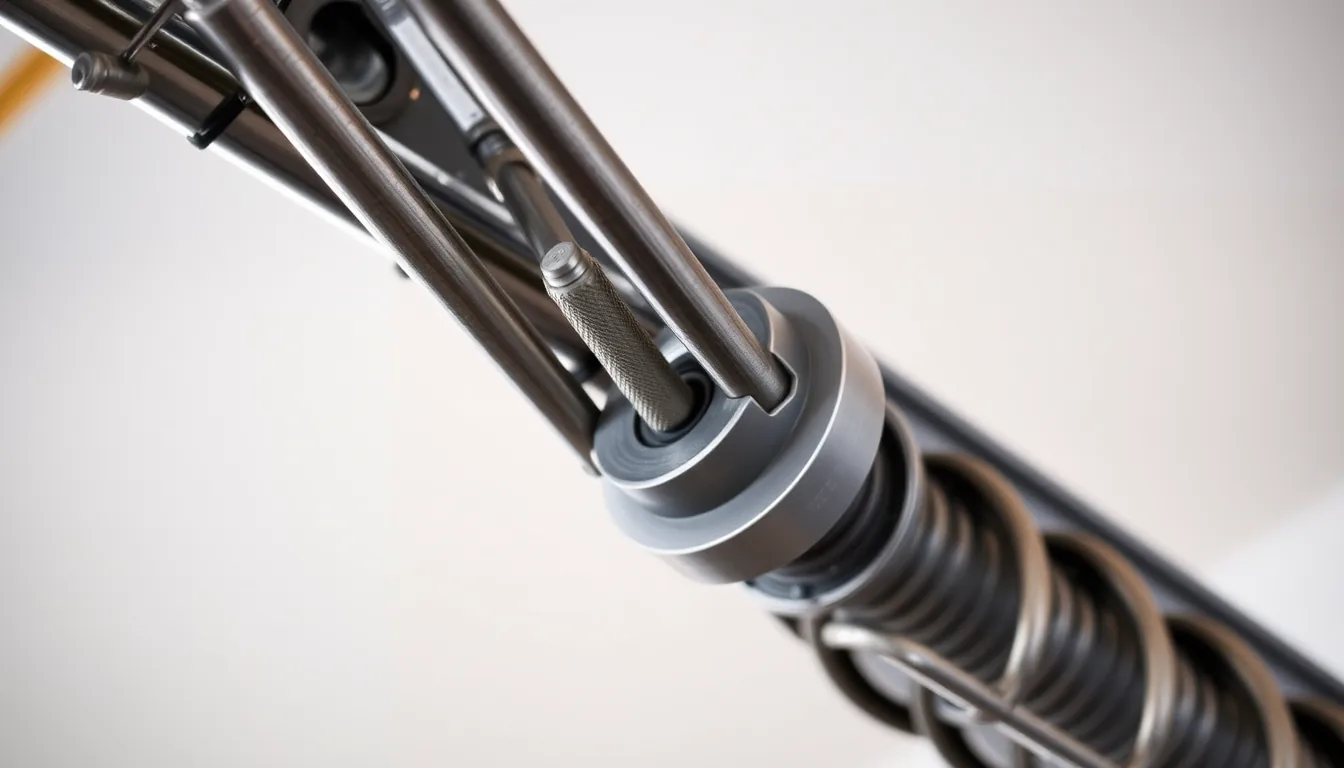
Read the Door Before You Touch Anything
Diagnosis starts from the garage floor, with the door closed and the opener unplugged. Work through the hardware in a fixed order, using only your eyes.
- The spring above the door. A healthy torsion spring is one continuous, tightly wound coil on the shaft over the opening. A broken one almost always shows a clean gap of an inch or two where the steel snapped and the halves recoiled apart. You can see it from across the garage.
- The cables at the top corners. Each lift cable wraps around a grooved drum at the end of the shaft. Look for a cable that has jumped its groove, crossed over itself, or gone slack on one side.
- The cables at the bottom. Follow each cable down to the bottom bracket on the lowest panel. Fraying that looks like a splayed paintbrush, and rust where the cable meets the bracket, are the two failure signs technicians check first.
- The door in its opening. A door sitting crooked, one side higher than the other, usually means one cable is carrying load and the other is not.
What a Wound Spring Is Actually Holding
A torsion spring does not push or pull. It twists. During installation it is wound several full turns on its shaft, and a spring for a 7-foot door typically takes more than seven. Every turn stores energy in the steel, the way twisting a wet towel stores it in the fibers. That stored twist is what lifts a door weighing 150 to 300 pounds: as the door rises, the spring unwinds through the drums and cables, paying out force so the opener only has to guide the weight, not carry it.
Here is the detail most people get backwards: the spring is at maximum wind when the door is closed. A closed door is not a resting door. Extension springs, the long springs that stretch alongside the horizontal tracks on some doors, store energy by stretching instead of twisting. Each one should have a safety cable running through its center so a snapped spring is caught instead of thrown across the garage.
Winding Bars, and Why the Tool Is the Whole Job
Professionals control torsion springs with winding bars: solid steel rods, commonly about 18 inches long, sized to fit the holes in the spring's winding cone with almost no play. A technician works with two bars and keeps one fully seated in the cone at all times, so the spring's force always has a controlled path. The bar's length matters too, because it provides enough leverage to hold the wind with steady, predictable effort.
The classic substitute in DIY injuries is a screwdriver. A screwdriver is shorter, so the same spring force pushes back far harder against the hand. Its tip is tapered, so it can slip out of the cone hole under load without warning. When it slips, the cone spins with everything the spring was holding, and the tool goes with it, right at face height, because the winding cone sits at the top of a ladder's reach.
The Injuries That Actually Happen
Emergency departments see the same injury categories from garage door spring and cable work, and each one maps directly onto the hardware:
- Hand and forearm lacerations from a slipped winding tool or the whipping end of a snapped cable.
- Fractures of the hand and wrist when a winding cone spins free while a hand is still on the tool.
- Head and facial injuries from a bar or tool kicked back at ladder height.
- Fingertip crush and amputation injuries from fingers caught between cable and drum, or in the panel joints of a moving door.
- Crush injuries from the door itself, because a door with no working spring is dead weight and comes down as fast as gravity allows.
None of these require doing something obviously reckless. Most begin with a bolt that looked ordinary, which is exactly why the boundary below is drawn where it is.
The Homeowner Boundary: Observe and Report
The safe line is simple: never unbolt, loosen, or unhook anything that a spring or cable is attached to. That includes the bottom brackets, which are two ordinary-looking bolts at floor level anchoring the full cable tension, plus the cable drums, the set screws on the winding cones, and the center bearing plate. It also means not pulling the red emergency release on a door stuck open with a suspected broken spring, because the release hands the door's entire weight to gravity.
Everything on the observation list above is safe: looking, photographing from a distance, unplugging the opener, and writing down what you see. A useful service request notes the door height (7-foot and 8-foot doors are the common sizes), whether there are one or two springs above the opening, where any coil gap sits, which cable looks slack or frayed, and whether the door is stuck open, closed, or crooked. A technician will verify the spring, walk both cables end to end, check the drums, and secure the door's weight before any bolt comes off. Broken springs and cables are exactly the kind of emergency this site exists for. Describe what you see and submit a service request through our contact form, and we will get it in front of a garage door technician.
Frequently Asked Questions
Why does a broken torsion spring show a gap in the coil?
The spring is one continuous length of wound steel held under twist. When the steel fatigues and snaps, the two halves recoil away from the break, leaving a visible gap of an inch or two in an otherwise tight coil. That gap is the most reliable visual sign of a broken torsion spring, and you can spot it from the garage floor without touching anything.
Is it safe to pull the red emergency release cord if a spring is broken?
It depends entirely on the door's position. The release disconnects the door from the opener, and with a broken spring nothing else supports the door's weight. If the door is open, it can slam down. If the door is already closed, pulling the release is lower risk, but the door may be far too heavy to lift by hand. Note the door's position in your service request instead of testing it.