
7 Signs Your Garage Door Spring Is Broken or Failing
A garage door spring rarely fails quietly. Most breaks announce themselves with one loud bang, followed by a door that suddenly weighs more than your opener can lift. This guide walks through the seven signs of a broken or failing spring in the order you are likely to notice them - what you heard, what you can see, and what the door does when you press the button - plus what to do and not do next.
Request Service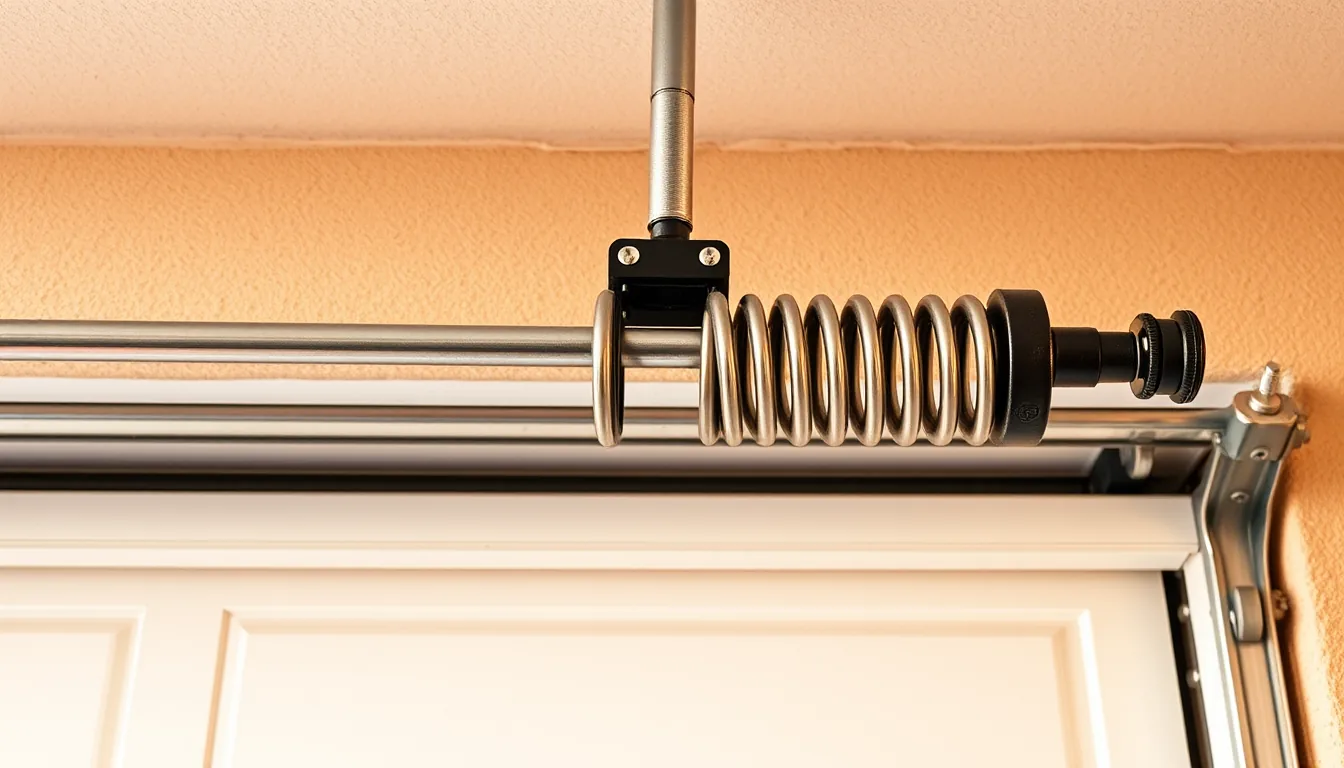
Start With What You Heard
A torsion spring - the tightly wound coil mounted on a steel shaft above the door opening - holds its greatest tension when the door is closed. When a worn coil finally lets go, that stored energy releases in a fraction of a second. From inside the house it sounds like a firecracker or something heavy hitting the garage floor, and it often happens at night or on a cold morning, because steel contracts as the temperature drops and adds stress to an already fatigued coil.
If you heard one sharp bang and the door worked normally the day before, a broken spring is the prime suspect. Note when you heard it; that detail is worth including in your service request.
Three Things to Look For Before You Touch Anything
Stand inside the garage with the door closed and use a flashlight. Look - do not touch.
- A gap in the coil. A snapped torsion spring separates into two sections with a clean break between them, often an inch or two wide. It is the single most reliable visual sign of a break.
- Slack or drooping cables. The lift cables run from brackets at the bottom corners of the door up to drums on the ends of the torsion shaft. Spring tension is what keeps them taut. When a spring breaks, the cables sag, and they can jump off the drums entirely.
- Rust or stretched coils. If your door uses extension springs - the long, thinner springs mounted above the horizontal tracks - daylight between the coils while the door is closed means the steel has stretched. Rust pits the wire and shortens the roughly 10,000 open-close cycles a standard spring is built to deliver.
What the Door's Behavior Is Telling You
Some failing springs give no clear visual sign, so watch what the door actually does.
- It lifts about six inches, then stops. Your opener does not lift the door; the springs do, and the opener mostly guides it. A double-wide steel door can weigh well over 150 pounds, and when a spring is broken the opener's force limit senses the strain and shuts down or reverses. That stop is a safety feature doing its job, not a bad opener.
- The door rises crooked. Extension-spring doors use one spring per side. If one breaks, the live side keeps lifting while the dead side drags, so the door cocks sideways and can jam or bend the tracks.
- It slams shut or feels dead-heavy. A door that falls fast on the way down, or that you can barely budge after pulling the red trolley release cord, has lost its counterbalance. Never pull that release cord while the door is open - with a broken spring, nothing is left holding the door up.
What to Do Next - and Three Things Not to Do
Leave the door where it is, ideally closed, and unplug the opener so nobody operates it out of habit. Keep children, pets, and vehicles away from the opening. Then describe what you found - the bang, the gap in the coil, slack cables, a crooked lift - in a service request through the form on our contact page. Those details matter, because replacement springs are matched to a door by wire diameter, inside diameter, and length; there is no one-size spring.
Three things not to do:
- Do not lift the door by hand. With a broken spring it is dead weight, and it can drop without warning.
- Do not pull the red release cord unless the door is already fully closed.
- Do not unbolt anything attached to the springs, cable drums, or bottom brackets. Those parts hold extreme tension and cause serious injuries every year. This is not a DIY repair.
A technician will typically confirm the spring type first, check the door's balance and weight, measure the failed spring, and then inspect the cables, drums, and end bearings, since a snapping spring shock-loads everything connected to it.
Frequently Asked Questions
Why did my spring break overnight when nobody was using the door?
A torsion spring stores its maximum tension while the door is closed, so a fatigued coil most often lets go with the door down. Cold weather adds stress because the steel contracts. The break itself is instant - one loud bang - and needs no one to be operating the door. If you heard a bang at night and the door will not lift in the morning, look for a gap in the coil above the opening.
My door has two springs and only one broke. Can I keep using it?
No. The two springs share the door's weight, and the surviving spring plus your opener cannot lift it safely. The door will rise crooked, cables can jump off their drums, and the opener's force limit will usually stop it partway anyway. Leave the door closed and submit a service request. A technician may also suggest replacing both springs, since the second one has the same cycle count on it.