
Is It the Opener or the Door? Run This One-Minute Test
A garage door that will not move leaves you with one question before anything else: is it the opener, or the door itself? A simple one-minute test answers it, using the red release cord already hanging from your opener rail. Here is how to run the test, how to read each result, and how the answer changes the repair you should request.
Request Service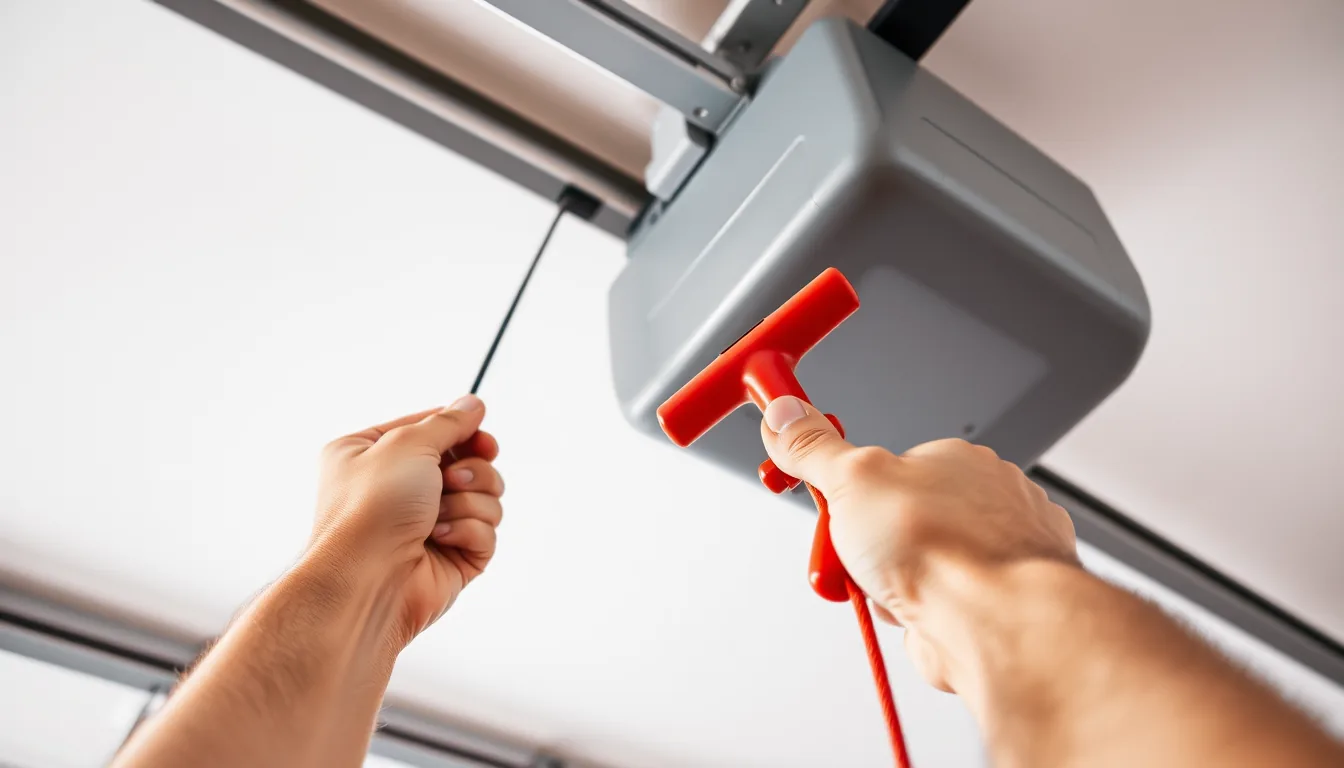
The One-Minute Test, Step by Step
Start with the door fully closed. A closed door cannot fall, so the test is safe even if a spring or cable has already failed. Never pull the release while the door is stuck open or partway up — a door with a broken spring can come down fast and hard.
Find the red T-handle cord hanging from the opener rail. It releases the trolley carriage, the part that drags the door along the rail. Pull it straight down until it clicks. Then lift the door by hand a foot or two and note three things:
- Weight. A balanced door lifts with modest effort — many can be raised with one hand.
- Evenness. Both sides should rise level in the opening.
- Feel. Smooth rolling, with no grinding or catching at one spot.
Light and Smooth: The Door Is Fine — Read the Opener
If the door glides up and stays put when you let go at about waist height, the springs, cables, and tracks are doing their jobs. Your problem is in the opener system. Gather a few clues before you submit a request:
- Photo-eye sensors. Two small lenses sit about six inches off the floor on each side of the opening. A dark or blinking lens, or a bracket knocked out of line, will stop the door from closing. Cleaning the lenses and gently straightening the brackets is safe to do yourself.
- Motor sounds. A hum with no movement often means a stripped drive gear inside the motor head, or a trolley that never re-engaged after a past release.
- Wall button versus remote. If the wall button works but the remote does not, the fix may be as small as a battery or reprogramming.
Heavy, Stuck, or Crooked: The Door Hardware Failed
If the door feels heavy — like its real weight instead of a balanced load — a spring has failed. Most doors use a torsion spring, the tight steel coil on a shaft above the closed door; a snapped one usually shows a clear gap of about two inches in the coil. Lighter and older doors may use extension springs, which stretch alongside the horizontal tracks instead.
A door that rises crooked, or hangs lower on one side, points to a lift cable that broke or jumped off its drum. A door that grinds or sticks at one spot in its travel points to a bent track section or a failed roller at that height.
Stop at diagnosis. Torsion springs, lift cables, and the bottom brackets they attach to are under extreme tension. Do not unwind, adjust, or unbolt any of them. Lower the door gently if you can, and describe what you found in a service request instead.
Why Forcing a Bad Door with the Opener Multiplies the Damage
Springs lift the door; the opener only guides a balanced load along the rail. Press the button with a broken spring and the motor drags the door's full dead weight — an insulated double-car steel door can weigh well over 150 pounds. That is how one broken part becomes three:
- The drive gear inside the motor head strips.
- The top panel bends where the opener bracket pulls on it.
- Slack cables jump their drums and cock the door in its tracks.
A crooked or binding door is no different: every forced cycle grinds the rollers against bent track and grows the repair. Once the test points to door hardware, stop using the opener until it is fixed.
What to Write in Your Service Request
Your test result is exactly what a technician wants to read. In the form on our contact page, describe which branch you landed on: "door lifts light and smooth, opener hums but the chain never moves," or "door is very heavy and the spring coil above it has a two-inch gap." That detail helps match your request with a technician prepared for the right repair — and it keeps you away from the parts that need winding bars and training to touch.
Frequently Asked Questions
My door is stuck partway open. Should I pull the red release cord?
No. Pull the release only when the door is fully closed. A door stuck partway up may be held there by the opener alone; if a spring or cable has failed, releasing it can let the door free-fall. Leave it where it is, keep people and cars clear, and describe the stuck position in your service request.
The door lifts easily by hand, but the opener only hums. What does that mean?
A hum with no movement usually means the motor runs but nothing is being driven. Common causes are a stripped drive gear inside the motor head or a trolley carriage that never re-engaged after the release cord was pulled. Note whether the chain or belt moves during the hum — that detail helps a technician arrive prepared.